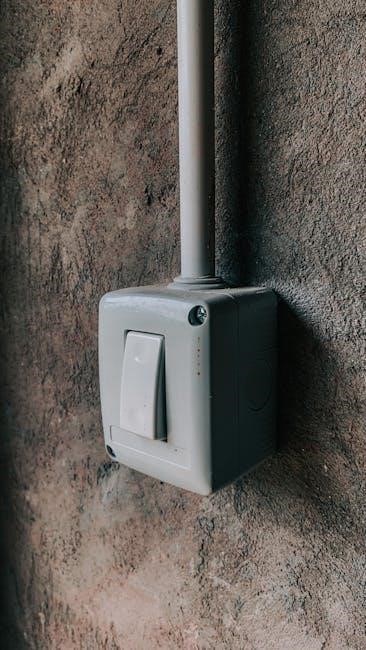
Article Plan: Cost to Install a Manual Transfer Switch (as of 02/26/2026)
Planning a manual transfer switch installation? Expect costs between $500 and $1,500 for the switch and labor, potentially reaching $2,800.
Installation typically takes less than a day.
Manual transfer switches are crucial safety components when integrating a portable generator with your home’s electrical system. Unlike automatic transfer switches, these require manual operation – physically switching power sources; This prevents dangerous backfeeding to the utility grid, protecting both your home and line workers.
As of February 26, 2026, installation costs vary significantly. A basic 4-circuit switch, with professional installation, can start around $800, while more complex setups, like those utilizing a Generac 9854, can exceed $1,650 (parts and labor). Understanding these costs upfront is vital for budgeting and ensuring a safe, reliable power solution during outages.
Why Install a Manual Transfer Switch?
Investing in a manual transfer switch offers critical safety and convenience during power outages. Primarily, it prevents dangerous backfeeding – electricity flowing back into the utility grid – which can harm utility workers and damage equipment.
Beyond safety, a transfer switch allows you to power essential circuits during an outage, avoiding the limitations of extension cords. While costs range from $500 to $2,800 installed, the peace of mind and functionality are significant. Consider the alternative: potential food spoilage, loss of heating/cooling, and inconvenience, making the investment worthwhile.
Understanding the Components of a Transfer Switch System
A complete manual transfer switch system comprises several key elements impacting overall cost. The transfer switch itself is the central component, directing power flow. An inlet box, or connector, provides a safe connection point for a portable generator’s power cord.
Essential wiring and circuit breakers are needed to connect the switch to your electrical panel and designated circuits. The complexity of your existing panel significantly influences installation costs. Remember, professional installation, ranging from $400 to $1,300, ensures these components work safely and effectively.
The Transfer Switch Itself
The transfer switch’s cost varies significantly based on the number of circuits it can handle. A basic 4-circuit manual transfer switch can be found around $200. However, larger systems, like an 8-circuit model, will naturally increase the price.
For whole-house coverage, a 10-circuit or larger switch is necessary, potentially costing upwards of $500. Consider a 100A manual transfer panel for broader coverage. Remember to factor in the switch’s wattage rating to ensure it meets your power needs during an outage.
Inlet Box/Connector
The inlet box, crucial for safely connecting a portable generator, adds to the overall installation cost. This component allows you to plug the generator directly into your home’s electrical system, bypassing the main panel. Costs for the inlet box itself typically range from $100 to $300, depending on amperage rating and build quality.
Installation requires a dedicated outdoor location and proper wiring to the transfer switch. Some installations may necessitate an outdoor cutoff switch for enhanced safety when connecting generator equipment, adding to the labor expenses.
Wiring and Circuit Breakers
Wiring and circuit breakers represent a significant portion of the installation cost. New wiring is often needed to connect the transfer switch to the selected circuits within your electrical panel. The quantity of circuits impacts the wire gauge and length required, influencing material expenses.
Circuit breakers, sized appropriately for each circuit, are essential for safety. Expect to spend between $50 and $200 on these components. Labor costs for wiring and breaker installation can vary widely, depending on the complexity of your existing electrical system and local electrician rates.
Factors Influencing Installation Cost
Several key factors dramatically affect the total cost of a manual transfer switch installation. Location and accessibility play a role; difficult-to-reach panels increase labor time. The complexity of your electrical panel – its age, existing wiring, and available space – is crucial. Older or crowded panels require more work.
Local labor rates vary significantly by region. Finally, the chosen transfer switch’s amperage and circuit count directly impact both material and installation expenses. Permits and inspections also add to the overall financial commitment.
Location and Accessibility
The physical location of your electrical panel significantly impacts installation costs. Difficult access – such as a panel located in a cramped attic, basement, or outside requiring extensive routing – increases labor hours. Obstructions around the panel necessitate more time for an electrician to safely and effectively work.
Remote locations may also incur higher travel fees. Conversely, an easily accessible panel in a central location will generally result in lower installation charges, streamlining the process and reducing the electrician’s time on-site.
Complexity of Electrical Panel
The existing electrical panel’s complexity is a key cost driver. Older panels, or those already nearing capacity with numerous breakers, require more careful installation. Limited space within the panel can necessitate upgrades or modifications, adding to the overall expense.
Panels requiring extensive rewiring or those lacking sufficient grounding capacity will increase labor time and potentially require additional materials. A straightforward panel with ample space and available breaker slots will result in a simpler, less costly installation process.
Local Labor Rates
Electrician labor costs vary significantly by geographic location. Expect higher rates in metropolitan areas and regions with a high cost of living. Average hourly rates typically fall between $75 and $150, but can exceed this range. A friend who is an electrician might offer a reduced rate, potentially saving around $100-$200 on installation, as seen in recent examples.
The total labor cost depends on the installation’s complexity and the electrician’s experience. Obtaining quotes from multiple local electricians is crucial for securing a competitive price.
Cost Breakdown: Manual Transfer Switch Installation
A manual transfer switch installation involves several cost components. The primary expenses include the transfer switch unit itself, labor for installation, and permit and inspection fees. Expect to allocate between $400 and $1,300 for labor alone, depending on the electrical panel’s complexity and local rates. The switch unit’s price varies based on its circuit capacity – 4-circuit, 8-circuit, or larger – ranging from $200 to potentially over $500. Don’t forget to factor in potential additional costs like panel upgrades.
Cost of the Manual Transfer Switch Unit
The transfer switch unit’s cost is directly tied to its amperage and the number of circuits it supports. A 4-circuit manual transfer switch typically ranges from $200, offering basic backup power capabilities. 8-circuit models generally cost a bit more. For larger power needs, 10-circuit and larger switches can exceed $500. Consider the Generac 9854, often bundled with installation for around $1,650 (parts and labor). Choosing the right size depends on your essential appliance requirements.
4-Circuit Manual Transfer Switch Pricing
A 4-circuit manual transfer switch represents an economical entry point for whole-house backup power. Expect to purchase the unit itself for approximately $200. This configuration is suitable for powering essential circuits like refrigerators, lights, and perhaps a well pump. However, high-demand appliances like central AC won’t be supported. Online forums suggest a complete installation, including a Predator 2000 Watt Inverter generator, can total around $800, with installation accounting for roughly $100 if a friend assists.
8-Circuit Manual Transfer Switch Pricing
An 8-circuit manual transfer switch offers increased flexibility compared to a 4-circuit model, allowing for more essential appliances to be powered during an outage. While specific pricing wasn’t directly detailed in the provided sources, expect to pay more than the 4-circuit option. A reasonable estimate for the switch itself would be in the $250 — $400 range. Installation costs will likely fall within the broader $400 — $1,300 bracket, depending on electrician rates and the complexity of your existing electrical panel.
10-Circuit and Larger Manual Transfer Switch Pricing
For 10-circuit or larger manual transfer switches, costs increase significantly due to the larger unit size and potentially more complex installation requirements. While precise figures aren’t available in the provided data, anticipate spending $400 — $600+ solely on the switch itself. Installation expenses will likely be at the higher end of the spectrum, potentially reaching $800 ─ $2,800, especially if panel upgrades are needed to accommodate the increased capacity. A 100A manual transfer panel, as mentioned in one source, represents a substantial investment.
Labor Costs for Installation
Professional installation labor costs for a manual transfer switch vary considerably. Average hourly electrician rates are not explicitly stated, but installation time significantly impacts the final bill. Estimates range from a low of $100 (thanks to a friend’s discounted rate) to as high as $1,300 for a standard installation. More complex jobs, potentially requiring panel upgrades, could reach $2,800. Installation time is generally less than a day, but complexity dictates the hours needed, directly influencing the overall labor expense.
Average Hourly Electrician Rates
Specific hourly rates for electricians weren’t directly provided in the sourced data. However, the total installation costs suggest a range. A friend’s assistance reduced labor to $100, implying a significantly lower rate. Conversely, installations costing $1,300 or more indicate higher standard rates. Generally, expect to pay between $75 and $150 per hour for a qualified electrician, depending on location and experience. Complex installations, requiring more time and expertise, will naturally command higher hourly fees, impacting the overall project cost.
Installation Time Estimates
Most manual transfer switch installations can be completed in less than a day, according to Consumer Reports. However, this timeframe is heavily dependent on the complexity of your existing electrical panel and the accessibility of the installation location. A straightforward setup, with easy access and an uncomplicated panel, might take as little as 4-6 hours; More complex scenarios, potentially requiring panel upgrades or extensive wiring, could extend the installation time to a full day or even longer, increasing labor costs accordingly.
Permit and Inspection Fees
Don’t overlook permit and inspection costs when budgeting for your manual transfer switch installation. These fees vary significantly by location, but generally range from $50 to $200. Obtaining the necessary permits ensures the work meets local electrical codes and safety standards. An inspection is then required to verify compliance. Failing to secure permits can result in fines and necessitate rework. Factor these costs into your overall budget to avoid unexpected expenses and ensure a legally compliant and safe installation.
Total Cost Estimates: Manual Transfer Switch Installation

Estimating the total cost requires considering all factors. A low-end installation, utilizing a friend’s electrician services, might reach $800 (switch & labor). A mid-range, typical installation generally falls between $1,000 and $1,300. However, complex installations, potentially needing panel upgrades or extensive wiring, can easily exceed $2,800. Remember to include permit fees. Generac 9854 installations, including parts and labor, have been reported at $1,650 before permit costs. Accurate quotes from qualified electricians are crucial.
Low-End Cost Estimate (Simple Installation)
A simple installation, assuming easy access and no electrical panel upgrades, represents the lowest cost scenario. This typically involves a 4-circuit manual transfer switch. Expect to pay around $200 for the switch unit itself. If you’re fortunate enough to have an electrician friend, labor costs could be minimized to approximately $100. Therefore, a total cost of around $800 is achievable. However, remember to factor in potential, though minimal, permit and inspection fees, potentially adding another $50-$100 to the final price.
Mid-Range Cost Estimate (Typical Installation)
A typical installation, encompassing a standard 4 or 8-circuit manual transfer switch and moderate electrical panel accessibility, falls into a mid-range price point. The transfer switch unit itself will likely cost between $200 and $500. Professional electrician labor, at average rates, could range from $400 to $800, depending on the complexity. Including necessary permits and inspections, anticipate spending approximately $1,000 to $1,300. This estimate assumes no significant panel upgrades or extensive wiring modifications are required during the process.
High-End Cost Estimate (Complex Installation)
Complex installations, often involving older or crowded electrical panels, or requiring significant wiring upgrades, represent the highest cost scenario. The transfer switch itself could reach $800 for a larger capacity unit. Labor costs can escalate to $1,500 ─ $2,800 due to increased time and difficulty. Permits and inspections add to the expense. If a panel upgrade is necessary, factor in an additional $500 — $1,500+. A complete high-end installation, therefore, could easily exceed $2,800, potentially reaching $4,000+ depending on the scope of work.

Cost Comparison: Manual vs. Automatic Transfer Switches
Manual transfer switches generally offer a more budget-friendly solution, with total installed costs ranging from $500 to $1,500, as detailed previously. Automatic transfer switches (ATS), however, provide hands-free operation during outages. This convenience comes at a premium. ATS units themselves are significantly more expensive, and installation is more complex, pushing total costs upwards of $1,500 — $3,000+. While manual switches require user intervention, the initial investment is considerably lower, making them a practical choice for many homeowners.
Potential Additional Costs
Beyond the basic installation, several factors can inflate the overall cost. Electrical panel upgrades may be necessary if your existing panel lacks capacity, adding $400 to $2,800 to the project. Wiring upgrades to support the transfer switch and generator can also be required. Furthermore, if you don’t already own one, the generator itself represents a significant expense. Expect to pay anywhere from $500 for a basic inverter generator to well over $1,650 for a more powerful model like a Generac 9854.
Electrical Panel Upgrades
Older or fully occupied electrical panels often necessitate upgrades when installing a manual transfer switch. If your current panel lacks available breaker slots or sufficient amperage, replacement or expansion becomes crucial. Panel upgrades can range significantly, from $400 for minor adjustments to $2,800 for a complete panel replacement. The cost depends on the panel’s size, complexity, and local electrical codes. A qualified electrician will assess your existing setup and provide a precise estimate before commencing any work, ensuring safety and compliance.
Wiring Upgrades
Existing wiring may require upgrades to safely handle the increased electrical load from a generator connected via a manual transfer switch. Outdated or undersized wiring poses a fire hazard and must be replaced. Costs for wiring upgrades vary based on the length of the run, wire gauge, and accessibility. Expect to pay $100 to $500, or potentially more for extensive rewiring. An electrician will evaluate your current wiring, ensuring it meets code requirements and can support the generator’s power output, prioritizing safety and preventing future issues.
Generator Considerations (if applicable)

If you don’t already own one, factor in the cost of a generator! A Predator 2000 Watt Inverter can be found around $500, while larger units like the Generac 9854 are approximately $1,650 (parts & installation). Wattage is crucial; ensure the generator’s output matches your essential appliance needs. Consider fuel type (gas, propane, or dual-fuel) and runtime. Remember, the transfer switch simply allows generator power; it doesn’t include the generator itself, adding significantly to the overall project expense.
DIY Installation vs. Professional Installation
While tempting to save money, DIY transfer switch installation is generally not recommended due to electrical complexities and safety concerns. Professional installation typically ranges from $400 to $1,300 for a manual switch, but can reach $2,800 depending on the project. A friend who is an electrician can reduce labor costs – one user reported $100 labor, saving around $200. However, improper wiring can be dangerous and may void warranties. Permits and inspections are often required, adding to the cost and complexity.
Finding a Qualified Electrician
Locating a skilled electrician is crucial for a safe and code-compliant transfer switch installation. Start by seeking recommendations from neighbors, friends, or online review platforms. Verify their licensing and insurance to protect yourself from liability. Look for electricians with specific experience in generator installation and transfer switch wiring. Don’t hesitate to check their references and online ratings. A qualified electrician will provide a detailed quote, explain the process clearly, and adhere to local electrical codes, ensuring a reliable and safe system.
Getting Quotes from Multiple Electricians
Obtaining several quotes is essential for securing a competitive price on your transfer switch installation. Contact at least three electricians and request a detailed, written estimate outlining all costs – parts, labor, permits, and potential additional fees. Compare these quotes carefully, noting any discrepancies in scope or materials. Don’t automatically choose the lowest bid; consider the electrician’s experience, reputation, and clarity of communication. A thorough quote will prevent unexpected charges and ensure transparency throughout the project.
Questions to Ask Your Electrician
Before hiring, ask potential electricians about their experience with manual transfer switch installations specifically. Inquire about their licensing and insurance for your protection. Discuss the estimated project timeline and potential disruptions. Clarify if the quote includes permit acquisition and inspection fees. Ask about their familiarity with local electrical codes and if they anticipate any panel upgrades being necessary. Finally, request a detailed explanation of the warranty offered on both parts and labor, ensuring long-term peace of mind.

Cost Examples from Recent Installations (Based on Online Data)
Recent reports indicate varied costs. One homeowner paid $800 total for a 4-circuit manual transfer switch installation, benefiting from a friend’s electrician rate of $100 for labor (typically around $200). Another installation, utilizing a Generac 9854, totaled $1,650 for parts and labor before permit costs. DIY Solar Power Forum users discuss 100A manual transfer panels with electrician installation of an outdoor cutoff switch. These examples highlight the impact of labor rates and equipment choices on overall project expenses.
Example 1: 4-Circuit Switch with Installation ($800 total)
This installation showcases a budget-friendly option. A homeowner successfully installed a 4-circuit manual transfer switch for a total cost of $800. The switch itself cost $200, while the labor expense was significantly reduced to $100 due to a personal connection with a qualified electrician. Standard electrician rates would likely have increased the labor cost to approximately $200, bringing the total closer to $400. This example demonstrates potential savings with pre-existing relationships.
Example 2: Generac 9854 with Installation ($1,650 parts & labor)
A more comprehensive setup, utilizing a Generac 9854 transfer switch, totaled $1,650 encompassing both parts and professional installation. This figure excludes permit costs, which will add to the overall expense. The Generac unit itself contributes significantly to the price, reflecting its brand reputation and features. This example highlights a mid-range investment for homeowners seeking a reliable power solution. Expect variations based on location and electrician rates, but this provides a realistic benchmark for similar installations.
Regional Cost Variations
Installation costs for manual transfer switches exhibit significant regional differences. Labor rates are a primary driver, with areas boasting higher costs of living generally charging more per hour for electrician services. Material costs can also fluctuate based on location and supplier availability. Expect higher quotes in metropolitan areas compared to rural locations. Furthermore, permit and inspection fees vary widely by municipality. Obtaining quotes from multiple local electricians is crucial to accurately assess the prevailing rates in your specific geographic area and ensure competitive pricing.
How to Save Money on Installation Costs
Reducing the cost of a manual transfer switch installation requires strategic planning. Obtain quotes from at least three qualified electricians to compare pricing. Consider a simpler installation if your electrical panel allows, avoiding unnecessary upgrades. If comfortable, handle preparatory tasks like clearing workspace, but never attempt electrical work yourself. Timing can matter; off-peak seasons might yield lower rates. Ask about potential discounts or promotions. A friend who is an electrician, like in one reported case, can significantly reduce labor expenses.
Safety Considerations During Installation
Prioritizing safety is paramount during transfer switch installation. Always hire a licensed electrician; improper wiring can create fire hazards or backfeed electricity onto the grid. Ensure the electrician obtains necessary permits and follows local electrical codes. An outdoor cutoff switch, as one user planned, enhances safety. Never work with electricity while wet or standing in water. Confirm the transfer switch is correctly sized for your generator and electrical panel’s capacity. Proper grounding is crucial. A qualified professional will ensure a safe and compliant installation.
Understanding Transfer Switch Wattage Ratings
Transfer switch wattage ratings are critical for safe operation. The switch must handle the combined wattage of all circuits it will power simultaneously. Exceeding the rating risks overloading and potential fire. Consider your essential appliances – refrigerator, furnace, lights – and their starting wattage (often higher than running wattage). A 2000-watt inverter generator, paired with a 4-circuit switch, is a common setup, costing around $800 installed. Larger homes or greater power needs necessitate higher-rated switches and potentially larger, more expensive generators.
Maintenance After Installation
Post-installation maintenance is surprisingly minimal for a manual transfer switch itself. However, regular generator maintenance is essential. This includes oil changes, fuel stabilizer addition, and air filter cleaning – following the generator’s manual. Periodically inspect the transfer switch for loose connections or signs of wear. While the switch doesn’t require frequent servicing, ensuring the electrical panel remains clear of obstructions is vital. A well-maintained system, initially costing between $500-$1500 installed, provides reliable backup power for years.
Warranty Information for Transfer Switches
Transfer switch warranties vary significantly by manufacturer and model. Generally, you can expect a one to five-year warranty on the switch itself, covering defects in materials and workmanship. Generac, a popular brand, often provides a limited warranty. Labor costs for installation, typically ranging from $400 to $1,300, are not usually covered under the switch’s warranty. Always carefully review the warranty documentation before purchase, considering extended warranty options for peace of mind, especially given the $500-$2,800 total installation cost.
Resources for Finding Transfer Switches and Electricians
Finding qualified professionals is crucial for a safe and code-compliant installation (costing $500-$2,800). HomeAdvisor and Angie’s List connect you with local electricians. For transfer switches, explore retailers like Home Depot, Lowe’s, and specialized online suppliers. DIY Solar Power Forum offers community insights. Bogleheads.org provides user experiences with installation costs. Remember to obtain multiple quotes – a 4-circuit switch install can be around $800, while a Generac 9854 setup may reach $1,650 (parts & labor).
Is a Manual Transfer Switch a Worthwhile Investment?
Considering the $500-$2,800 investment (including parts and labor, potentially $800 for a 4-circuit setup or $1,650 for a Generac 9854), a manual transfer switch offers significant peace of mind during outages. While automatic switches exist, the manual option provides a cost-effective solution for safely powering essential circuits. Consumer Reports highlights the safety benefits. Weigh the installation cost against the value of uninterrupted power and potential savings compared to prolonged outages – it’s a worthwhile investment for many homeowners.